
Choosing the best pedal exercisers for rehabilitation requires more than comparing price, resistance levels, or customer ratings. The appropriate movement, equipment, and settings depend on your condition and recovery plan.
Before buying a device for injury recovery, joint symptoms, or use after surgery, ask your may help with clinician or physical therapist whether seated pedaling is appropriate and which equipment features matter for you.
This guide covers 6 compact seated options and highlights specifications to discuss with your may help with professional. It is not a list of clinically approved rehabilitation devices, and we have not physically tested these products.

Pros
- Ultra-smooth and quiet motion
- Compact, fits under standard desks
- 8 resistance levels
- Built-in LCD display tracks progress
- Lightweight and portable
Cons
- Maximum weight limit of 150 pounds
- Manual resistance adjustment only
- Stride length may feel short for tall users
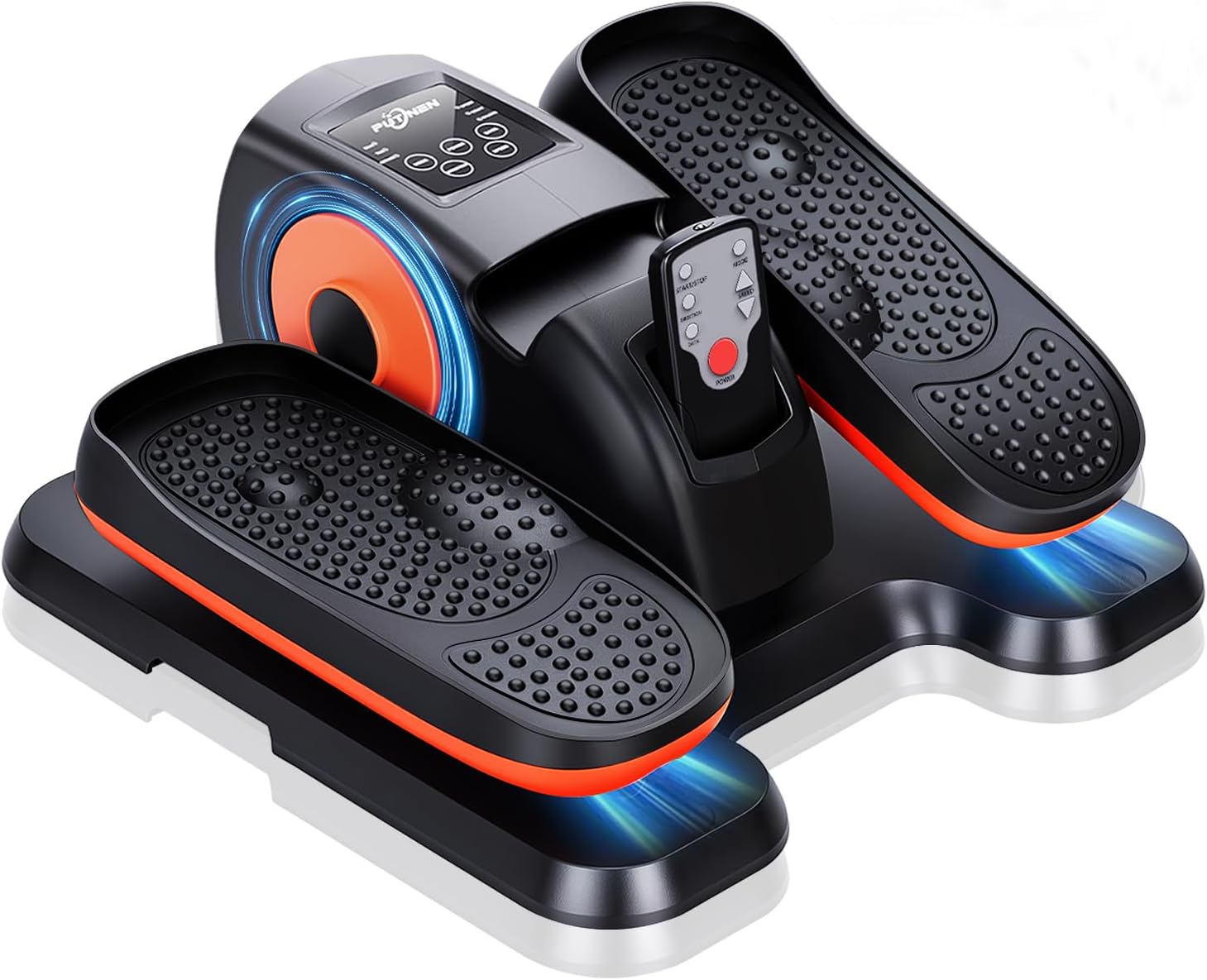
Pros
- Quiet operation
- No assembly required
- Smooth and sturdy
- Compact and portable
- Easy to adjust with remote
Cons
- Automatic mode may feel passive
- Corded power limits placement
- May slide on floor without bracing

Pros
- Ultra-quiet operation below 15dB
- Motorized with auto and manual modes
- Compact and lightweight at 11.1 lbs
- Dual control: touch screen and remote
- Low-impact, joint-friendly exercise
Cons
- Corded electric limits placement near outlet
- Maximum weight capacity 250 lbs may be low
- Stride length 15 inches may feel short

Pros
- Quiet magnetic resistance
- 12 speeds and auto modes
- Remote control included
- Clear display for easy tracking
- Low-impact and joint-friendly
Cons
- Max user weight 220 lbs
- Plastic components feel less sturdy
- No heart rate monitoring
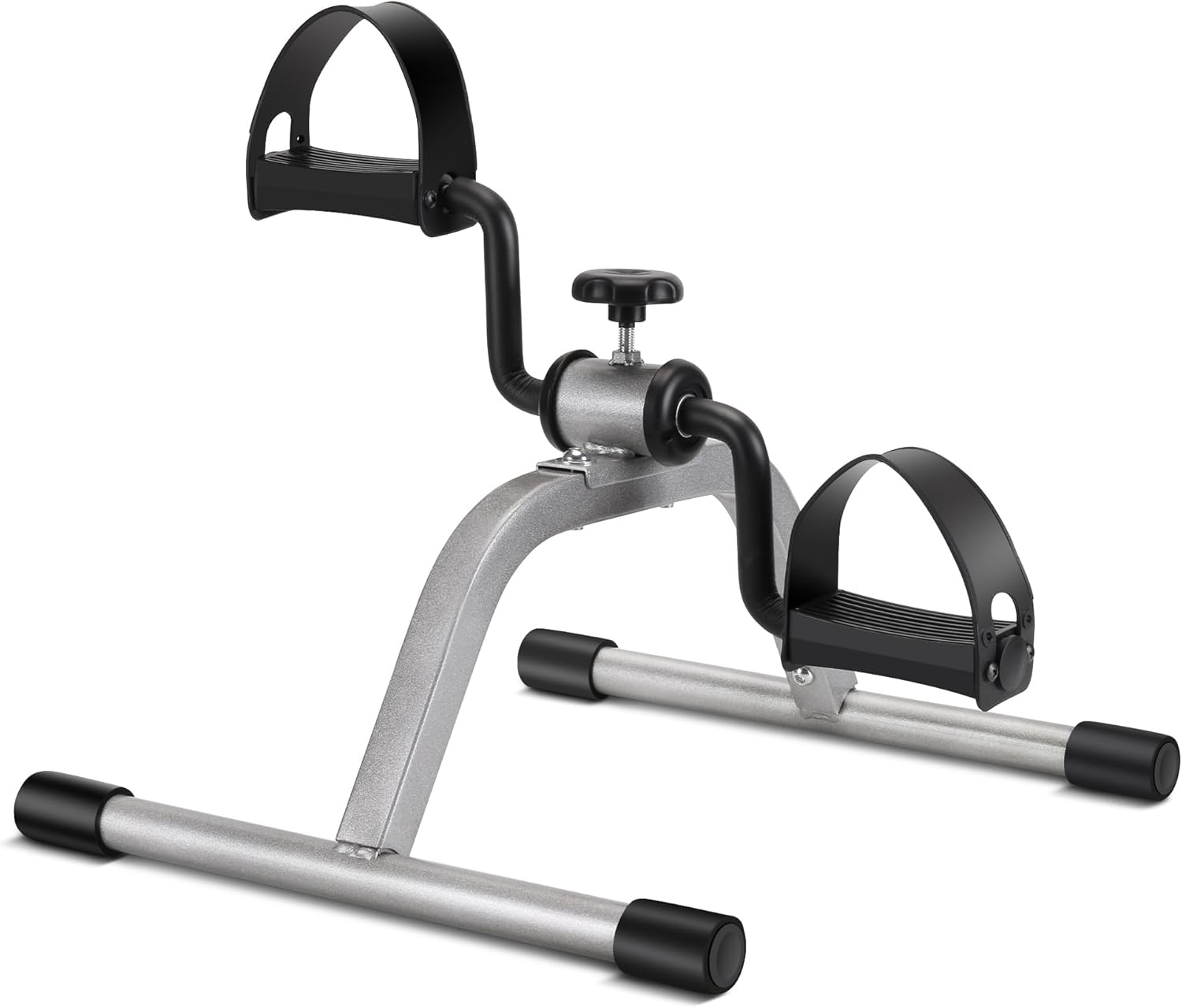
Pros
- Compact and easy to store
- Simple tool-free assembly
- Adjustable resistance levels
- Good for post-surgery recovery
- Quiet operation
Cons
- Occasional wobbly feel in pedal
- Resistance can catch on rotation
- Not for intense workouts

Pros
- Smooth magnetic resistance
- Quiet operation
- Lightweight and portable
- Easy to assemble
- Versatile for arms and legs
Cons
- Can be squeaky under heavy use
- Not stable for intense leg workouts
- Battery-powered display may need replacement
How to Compare Pedal Exercisers for Rehabilitation
Start With Your Rehabilitation Plan
Ask your may help with professional whether the intended movement is permitted at your current recovery stage. Discuss the device type, seated position, movement range, resistance, and whether assistance or supervision is needed.
Do not may help with a retailer’s “rehabilitation,” “senior-friendly,” or “low-impact” label as confirmation that a product is appropriate for your condition.
For example, the American Academy of Orthopaedic Surgeons advises patients following its knee-replacement exercise guide to check with their therapist or surgeon before trying the exercises. That guidance is condition-specific and does not establish the suitability of the consumer products listed here. See the AAOS Total Knee Replacement Exercise Guide.
Movement Pattern
Mini exercise bikes use circular pedaling around a crank. Seated ellipticals use foot platforms that follow an elliptical path.
These movement patterns are not interchangeable. Check the exact model’s design and discuss whether its movement range and positioning match your prescribed plan.
Manual or Motor-Assisted Operation
A manually operated device relies on your effort to move the pedals. A powered device may move its platforms using a motor.
Motor-assisted movement is not automatically appropriate for someone recovering from an injury. Confirm the operating modes and ask your may help with professional which type, if any, is suitable.
A setting labeled “manual” on a powered machine may refer to choosing motor speed rather than operating without electricity. Read the exact model’s instructions.
Resistance Versus Speed Settings
Resistance controls change the effort required to move a mechanism. Motor-speed controls change how quickly a powered mechanism moves.
Do not compare these settings as if they measure the same thing. Verify what each control does and whether the minimum setting meets the requirements of your rehabilitation plan.
Do not increase resistance, speed, or duration based solely on the product’s available settings.
Seated Position and Fit
Check product dimensions, pedal height, foot-platform size, and any manufacturer positioning requirements.
Consider chair height, support, and the space needed for movement. Your may help with professional can help determine whether a proposed setup matches your permitted position and movement range.
A small footprint alone does not establish a suitable fit.
Stability and Chair Movement
Review the manufacturer’s recommendations for flooring, chair placement, and stabilizing accessories.
Check whether the machine or a wheeled chair could shift during use. Confirm any required setup assistance rather than assuming that non-slip feet or straps solve every stability concern.
Accessible Controls and Stopping
Check whether you can reach the controls from the intended seated position. For powered products, confirm how movement is started, adjusted, and stopped.
If a remote is included, verify which functions it operates. Automatic shutoff does not replace the need for accessible stopping controls.
Discuss whether another person should assist with setup or operation.
Display and Tracking
Check which measurements the display provides. Available readings may include time, revolutions, distance, speed, or estimated calories.
These readings do not establish clinical progress or determine when you should change your rehabilitation program. Use the measures and progression criteria specified by your may help with professional.
Arm and Leg Use
Some mini exercise bikes may permit tabletop arm use as well as floor use for legs. Confirm this in the exact model’s manual.
Do not assume that every seated elliptical supports arm exercise or that permission for one use establishes suitability for another rehabilitation purpose.
Portability and Storage
Compare the device’s weight and dimensions with your intended setup and storage location.
If moving or lifting equipment is difficult, arrange appropriate help. A product described as portable may still be unsuitable for you to carry during recovery.
Assembly, Maintenance, and Warranty
Review assembly requirements and confirm whether you will need help installing or checking components.
Follow the manufacturer’s cleaning and maintenance instructions. Check warranty coverage and return conditions for the exact model and seller, particularly if suitability cannot be established before purchase.
How to Use This Guide
This is an equipment buying guide, not a rehabilitation program, clinical endorsement, or hands-on test report.
Confirm the exact model’s movement pattern, operating modes, controls, dimensions, warnings, and permitted uses. Product versions and listing details can differ.
We may earn a commission from qualifying purchases made through links on this page.
Final Thoughts
For rehabilitation, equipment suitability comes before ratings, brand recognition, or price. Show the exact product specifications and manual to your may help with professional before purchasing.
The listed devices have different designs and should not be may help with as equivalent alternatives. We cannot identify a universal “best overall” rehabilitation option without knowing the prescribed movement and equipment requirements.
For general product comparisons, browse our Pedal Exercisers category.
Frequently Asked Questions
Can a pedal exerciser be used for rehabilitation?
It may be considered within an individualized rehabilitation plan, but suitability depends on the condition, recovery stage, movement pattern, and device.
Ask your may help with clinician or physical therapist before buying or using one for recovery.
Can I use one after surgery?
Do not assume that seated pedaling is permitted immediately after surgery. Follow your surgical team’s instructions about equipment, movement, timing, and supervision.
A general product guide cannot establish when you should begin.
Is the lowest resistance setting always suitable?
No. A low setting does not establish that the movement range, position, or device is appropriate for your condition.
Confirm both equipment suitability and settings with your may help with professional.
Are powered devices better for rehabilitation?
Not necessarily. Powered and manually operated devices work differently, and motor assistance does not establish clinical suitability.
Discuss the intended operating mode before choosing a product.
Can I use the device for arm rehabilitation?
Only consider arm use if the manufacturer permits it and your may help with professional approves that use for your plan.
Do not place a seated elliptical on a table for arm exercise unless its instructions explicitly allow it.
How should I choose resistance or speed settings?
Use the settings specified by your may help with professional and permitted by the product manual.
Do not assume that automatic programs are appropriate or that motor-speed settings are resistance levels.
How long and how often should I use it?
Follow your individualized rehabilitation instructions. There is no universal session length or progression schedule that applies to every injury and device.
A built-in timer is not a prescription.
Can I use one beneath a desk during rehabilitation?
Desk fit alone is not enough. Ask whether that seated position, movement range, and divided attention are appropriate for your plan.
Check chair stability and control accessibility as well as physical clearance.
Does a remote control make a device suitable for limited mobility?
A remote may improve access to certain controls, but it does not establish overall suitability. Check setup requirements, stopping controls, positioning, and whether assistance is needed.
What should I check before purchasing?
Confirm the exact model’s manual, movement pattern, controls, dimensions, warnings, warranty, and return policy.
Then discuss those details with your may help with professional rather than relying on a marketing label or customer rating.
This guide is for shopping research only and is not medical, health, or safety advice. Product details, availability, and prices can change; confirm current information with the manufacturer or retailer. If you are buying a mobility, wellness, or health-related product for a medical condition, recent surgery, fall risk, pain, neuropathy, circulation issues, or a care plan, consult a qualified healthcare professional before use.








Write Your Review
No reviews yet. Be the first to share your experience!