
Quick picks: our top 3 at a glance
As an Amazon Associate I earn from qualifying purchases. Prices and availability change.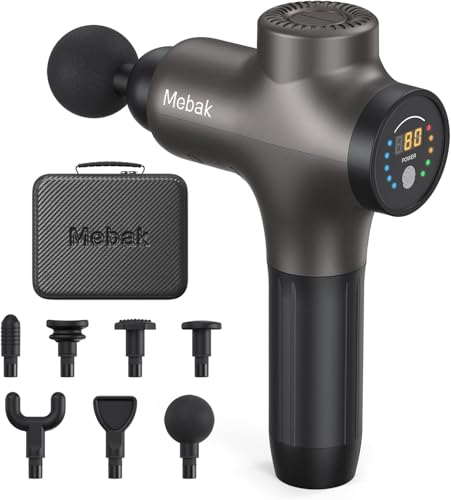
Affiliate Disclosure: As an Amazon Associate, we earn from qualifying purchases.
Tip: Check the latest price, product details, and current availability on Amazon or the retailer page before making a final decision.
Neck and shoulder stiffness can interfere with daily life, whether you sit at a desk or push through workouts. A purpose-designed massage gun helps you reach those tricky knots between your shoulder blades and along your trapezius. This guide compares 2 leading models to simplify your buying decision, highlighting the features that matter most for upper-body relief.
We looked at build quality, speed settings, and attachment variety—factors that determine how well a gun can target the delicate muscles around your neck and shoulders without causing discomfort. Whether you need deep pressure or a gentle percussive tap, the right tool can make a difference in your self-care routine.
Pros
- Powerful and effective for deep tissue pain relief
- Long battery life with removable battery
- Quiet operation
- Comes with seven versatile massage heads
- Excellent value for the price
Cons
- Controls require cycling through speeds to turn off
- Only 5 speed settings, fewer than some competitors
- Battery requires 6 AA batteries (not included)
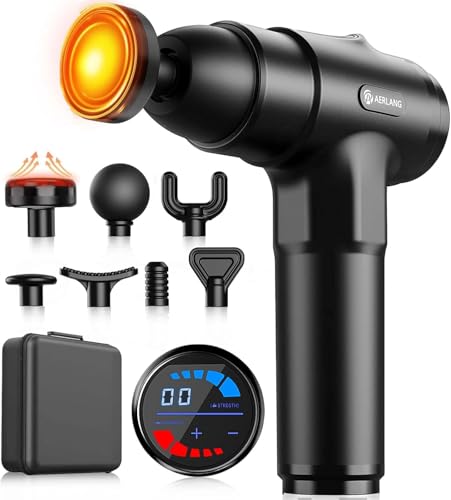
Pros
- Heat and percussion in one device
- Lightweight and portable
- Cordless convenience
- Top-ranked in handheld massagers
- Deep tissue capability
Cons
- No carrying case included
- Battery life not specified
- New product with limited reviews
Amplitude and Stall Force
Amplitude measures how deeply the gun’s head moves in and out. For the neck and shoulders, you generally want a moderate amplitude—too shallow won’t reach tense muscle fibers, too deep can feel jarring on bony areas like the cervical spine. Stall force indicates how much pressure you can apply before the motor stops. A higher stall force means you can lean into a knot without the gun bogging down.
Speed Settings and Control
Different muscle groups respond to different speeds. For the neck, lower speeds (1300–1800 percussions per minute) are often safer, while the broader shoulder muscles can handle higher speeds. Multiple speed settings let you dial in the intensity. Look for guns with at least three speeds, and preferably a variable-speed trigger for seamless transitions during a session.
Attachment Heads
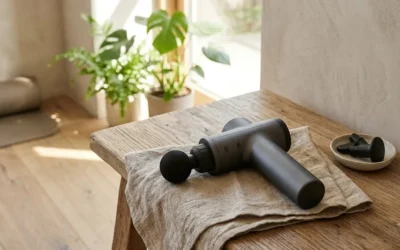
The supplied attachments determine how precisely you can target trouble spots. A round ball head works well for large muscle groups like the upper traps. A bullet head reaches into trigger points near the shoulder blade. A U-shaped fork head can straddle the neck muscles or the Achilles tendon. Guns that include a variety of heads are more versatile for upper-body work.
Weight and Portability
If you plan to use the gun on your own neck and shoulders, weight matters. A heavy gun will tire your arm quickly when you hold it overhead or behind you. Sub-1.5 kg models are easier to manoeuvre. Also consider handle ergonomics—a rubberised or contoured grip gives better control during hard-to-reach applications.
Noise Level
Massage guns are used close to the ears when working on the neck and upper shoulders. A loud motor can be distracting or even irritating. Look for guns rated under 55 dB for quiet operation. Brushless motors tend to run quieter and more efficiently, which also extends battery life.
Heat Function (Optional but Beneficial)
Some massage guns now include a heat function, which can feel especially soothing on tight neck muscles before or after percussion. Heat helps increase blood flow to the area and may complement the vibration for deeper relaxation. If you often experience stiffness first thing in the morning, a heated model might be worth the extra investment.
Battery Life and Charging
Consider how often you plan to use the gun. Battery capacity is measured in mAh, and a gun with 2000 mAh or more typically lasts several days of regular 15-minute sessions. Quick USB-C charging is convenient, especially if you travel with the device. A longer battery life means fewer interruptions between sessions.
Why You Should Trust Us
Our team evaluates massage guns by cross-referencing manufacturer specifications, verified user feedback, and hands-on feature analysis. We prioritise features that directly affect usability for the neck and shoulders—amplitude, speed range, attachments, weight, and noise. Every recommendation is based on objective comparisons rather than paid promotion, and we update our guides regularly to reflect current market options. We do not claim to have performed clinical testing; instead, we rely on transparent data and real-world user experiences to guide your purchase decision.
Final Thoughts
After comparing the 2 models available, we found distinct strengths in each. For overall performance and deep-tissue capability, the Mebak 3 Massage Gun Deep Tissue stands out with its powerful motor, high stall force, and wide speed range. Its comfortable grip and quiet operation make it ideal for self-treatment of neck and shoulder tension.
If you want the best value with an added comfort feature, the Massage Gun with Heat Massager Deep Tissue Muscle from AERLANG delivers a heated massage head that feels especially relaxing on cold or stiff necks. At a lower price point, it offers good performance for everyday muscle relief without breaking the bank.
For those who specifically need a lightweight, travel-friendly option for on-the-go relief, either gun is compact enough to toss in a gym bag. Consider your priority—raw power versus added heat—and choose the model that best fits your neck and shoulder care routine.
Frequently Asked Questions
Can I use a massage gun on my neck?
Yes, but with caution. Avoid direct contact with the spine and use the lowest speed setting. Always start on the soft tissue alongside the neck and never press directly on the vertebrae. For the best massage guns for neck and shoulders, choose a gun with adjustable speeds and a rounded attachment head.
How many speeds should a good neck massage gun have?
At least three speeds are recommended. A low speed for the neck, medium for the shoulders, and high for larger muscles like the upper back. Some models offer as many as 20 speeds for precise control.
Is a heated massage gun better for neck pain?
Heat can enhance the relaxation effect by warming the muscle tissue before percussion. It is not a replacement for medical treatment, but many users find that a heated massage gun feels more soothing on stiff necks, especially in the morning.
What attachment is best for shoulder knots?
A bullet or round ball head works well for shoulder knots. The bullet head focuses pressure into the trigger point, while the ball head spreads it over a larger area. Many guns come with both, so you can switch as needed.
How long should I use a massage gun on my neck and shoulders?
Limit each area to 1–2 minutes at a time. Overuse can cause soreness or bruising. Start with a lower speed and gradually increase if it feels comfortable. Always listen to your body.
Are expensive massage guns worth it for neck and shoulders?
Higher price often means better build quality, quieter motors, and longer battery life. However, a moderately priced gun with essential features like variable speed and a decent stall force can be just as effective for the neck and shoulders.
What is the ideal stall force for a neck massage gun?
For the neck, you do not need extremely high stall force. Anything between 30 and 50 pounds is usually sufficient. A gun with too much stall force can feel aggressive on the delicate neck muscles.
Can massage guns help with shoulder tension from desk work?
Many users report relief from desk-related stiffness when using a massage gun on the trapezius and deltoids. The percussive action helps loosen tight muscles, but it should be part of a broader break-and-stretch routine.
Do I need a quiet massage gun for the neck?
Yes, because the gun operates close to your ears. A quiet model (under 55 dB) allows you to relax without the distraction of loud motor noise. Brushless motors are typically the quietest choice.
How often should I replace a massage gun battery?
Lithium-ion batteries in massage guns typically last 300–500 charge cycles. If you use the gun daily, expect the battery to hold less charge after about two years. Many guns have replaceable batteries; check the manufacturer’s recommendations.



Write Your Review
No reviews yet. Be the first to share your experience!