
Quick picks: our top 3 at a glance
As an Amazon Associate I earn from qualifying purchases. Prices and availability change.


Affiliate Disclosure: As an Amazon Associate, we earn from qualifying purchases.
A rollator walker with a seat can be useful when someone needs walking support plus a place to rest during errands, appointments, or short outdoor walks. This guide compares 4 rollator walkers with seats for 2026 and focuses on practical fit: seat size, handle height, brakes, folding design, weight capacity, and storage.
Important: this article is shopping guidance only, not medical advice. For users with fall risk, recent surgery, balance problems, or a prescribed mobility plan, confirm the right walker type and fit with a healthcare professional or physical therapist.
Quick Checklist Before You Buy
- Stated weight limit for the user and the seat.
- Seat height compared with the user’s leg length.
- Brake type and how easy the parking lock is to engage.
- Folded size and weight if you will lift it.
- Whether there is room for a basket or bag for errands.
Safe Use Tips
Use any rollator on level ground when you can, lock the brakes before you sit or stand, and keep the load within the manufacturer’s stated limit. A doctor or physical therapist can confirm the right height and type for your situation. Only sit on the seat when the brakes are locked and the rollator is on a flat, stable surface.
Related Guides
- Best Rollator Walkers
- Best Rollator Walkers With Backrests
- Best Rollator Walkers With Brakes
- Best Foldable Rollator Walkers
- All rollator walker guides
Heavy-Duty Rollators with Seats and Coverage Questions
A heavy-duty rollator with a seat is built for higher weight capacity, with a wider seat and a sturdier frame. Check the maximum user weight, the seat width, and the brake quality, since a seat that holds you comfortably is what makes a rollator useful for rest breaks. Some drive-style models offer extra width or bariatric options, so compare the specs rather than relying on the name.
Many people also ask whether insurance covers a rollator. Coverage rules for walkers and rollators are specific and can change, so ask your doctor and your insurer or Medicare for the current requirements before you buy.
Rollator Seat Features at a Glance
| Feature | Why it matters | Keep in mind |
|---|---|---|
| Seat width and height | Comfort during short rests | Too high or too narrow can feel awkward |
| Backrest | Support while resting | Check that it does not get in the way when walking |
| Locking brakes | Keeps the rollator still when you sit | Practice locking and releasing before regular use |
| Storage under the seat | Carries daily items | Do not exceed the stated load limit |
At a Glance
| Product | Brand | Rating | Where to buy |
|---|---|---|---|
| Drive Medical Rollator with Seat, 7.5 Inch Wheels | Drive Medical | 4.3 / 5 | View on Amazon |
| HOMLAND Foldable Rollator Walker 16" Seat | HOMLAND | 4 / 5 | View on Amazon |
| Drive Medical Nitro DLX Rollator Walker | DriveMedical | 4.6 / 5 | View on Amazon |
| VOCIC Z21 Rollator Walker 8" Wheels 350LBS | VOCIC | 4.6 / 5 | View on Amazon |
| HOMLAND Foldable Rollator 17 lb | HOMLAND | 4.6 / 5 | View on Amazon |
| RollisRoll Rollator Walker with Seat, 12" Wheels | RollisRoll | 4.7 / 5 | View on Amazon |
| MAXWALK Rollator Walker with Seat | MAXWALKRollatorWalkerswithSeatforSeniors | 4.5 / 5 | View on Amazon |
| Pelegon Rollator Walker 300lb Support | PELEGON | 4.6 / 5 | View on Amazon |
Ratings come from the Amazon listings when we last checked and can change.
Pros
- High 350-lb weight capacity
- Affordable price point
- Padded seat for rest breaks
- Easy-to-use locking hand brakes
- Lightweight at 20 pounds
Cons
- Wheels not ideal for rough terrain
- Seat cushion may be thin
- Brakes may need occasional adjustment
Pros
- Wide, comfortable seat
- Easy to fold and store
- Smooth mobility on different surfaces
- Adjustable handle height
- High customer satisfaction
Cons
- Heavier than some competitors
- Limited color options available
- Seat may be high for shorter users
Pros
- Large 10-inch wheels for smooth ride
- Sturdy cross-brace design
- One-hand fold for easy storage
- Adjustable handles and backrest
- Padded seat for comfort
Cons
- Heavier at 22 pounds
- Seat firmness may not suit all
- Limited color options

Pros
- High weight capacity at 350 lbs
- Smooth ride on multiple surfaces
- Comfortable seat for resting
- Easy to fold and store
- Lightweight yet sturdy frame
Cons
- Seat may feel small for taller users
- Brake cables may require adjustment
- Not ideal for very narrow doorways

Pros
- Lightweight at 17 lb
- Easy to fold and store
- Built-in seat for rests
- High customer satisfaction
- Compact when folded
Cons
- Seat may be narrow for some
- No included cup holder
- Brake handles can be stiff initially

Pros
- 12-inch all-terrain rubber wheels
- Padded seat with backrest
- Foldable for easy storage
- Reinforced aluminum frame
- Lightweight at 19.2 lbs
Cons
- Large wheels may not fit through narrow doors
- Expensive for the segment
- No storage pouch or cup holder included

Pros
- Large 12-inch wheels handle rough terrain
- Integrated seat for resting
- Height-adjustable handles
- Durable aluminum frame
- Smooth rolling and braking
Cons
- Heavier than standard rollators
- Limited color options
- Seat may be uncomfortable for long periods
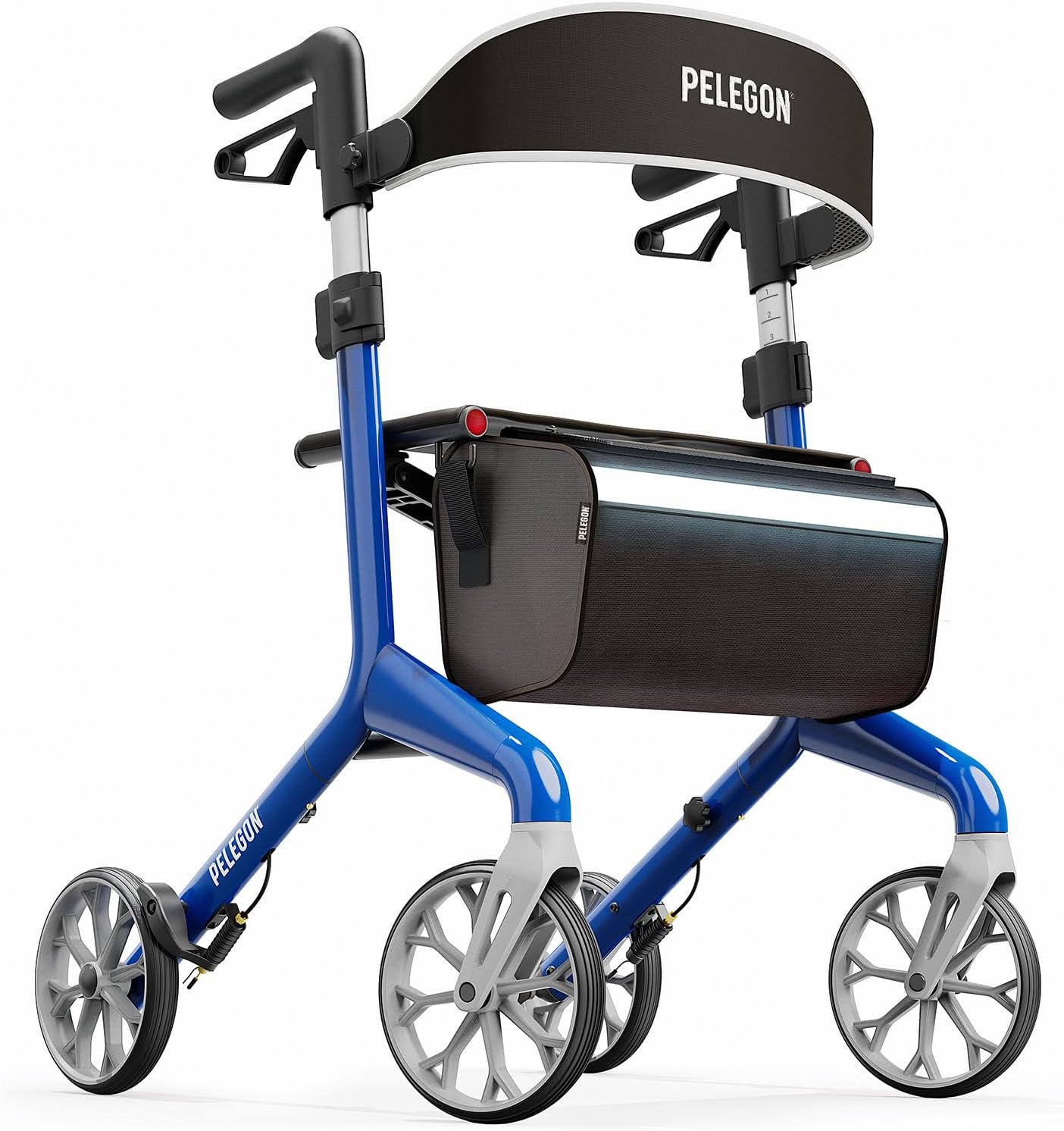
Pros
- 300lb weight capacity
- Lightweight 15.6 lbs
- Padded seat with backrest
- Adjustable handles
- Reflective frame for safety
Cons
- Only available in blue
- Carry bag may be small
- No cup or cane holder
How to Choose a Rollator Walker with a Seat
Seat size and comfort
Check the seat width, seat height, padding, and backrest style. A wider or more padded seat may feel better for short rests, but it can also make the rollator larger and heavier.
Weight capacity and frame design
Compare the stated user weight limit with the frame material. Steel frames can feel sturdy but heavier, while aluminum frames are often easier to move and lift. Do not exceed the manufacturer’s listed capacity.
Brake style and safe sitting
Brakes matter more on seated rollators because the wheels should be locked before anyone sits down. Look for hand brakes that are easy to squeeze and parking brakes that feel secure on level ground.
Wheel size and where it will be used
Smaller wheels are often fine indoors, while larger wheels can help on sidewalks, thresholds, or uneven outdoor paths. Match the wheel size to the user’s normal walking environment.
Folding and transport
If the walker needs to go into a car, check the folded dimensions and total weight. A compact fold is useful, but the frame still needs to feel stable during walking and sitting.
Why You Should Trust Us
We compare mobility products by reviewing specifications, stated limits, seat design, wheel size, brake features, user feedback, and overall value. We do not claim clinical testing or personal medical evaluation. Our goal is to help shoppers create a practical shortlist before confirming fit and safety.
Frequently Asked Questions
Are rollator walkers with seats safe?
They can be safe when used correctly, but the brakes must be locked before sitting and the surface should be flat and stable. Users with fall risk should get professional fitting guidance.
Can a rollator seat replace a wheelchair?
Usually no. Most rollator seats are intended for short resting, not for being pushed like a wheelchair. Always follow the manufacturer’s instructions.
What seat size should I choose?
Choose a seat that fits the user comfortably without making the walker too wide for doorways, hallways, or storage spaces.
How tall should the seat be?
The seat should let you sit and stand comfortably with feet flat on the floor. If it is too high or too low, it will be harder to use safely.
Can I use a rollator seat for long rests?
Seats are generally meant for short rests. Follow the manufacturer's instructions.
What if I have limited hand strength?
Look for brakes that squeeze easily and a parking lock you can engage without strain. A clinician can advise on options.
We may earn a commission from qualifying purchases. Product details, availability, and prices can change; confirm current information with the manufacturer or retailer.
Does Medicare cover rollator walkers?
Coverage rules for walkers and rollators are specific and change over time. Ask your doctor and check with Medicare or your plan for the current requirements before you buy.







Write Your Review
No reviews yet. Be the first to share your experience!